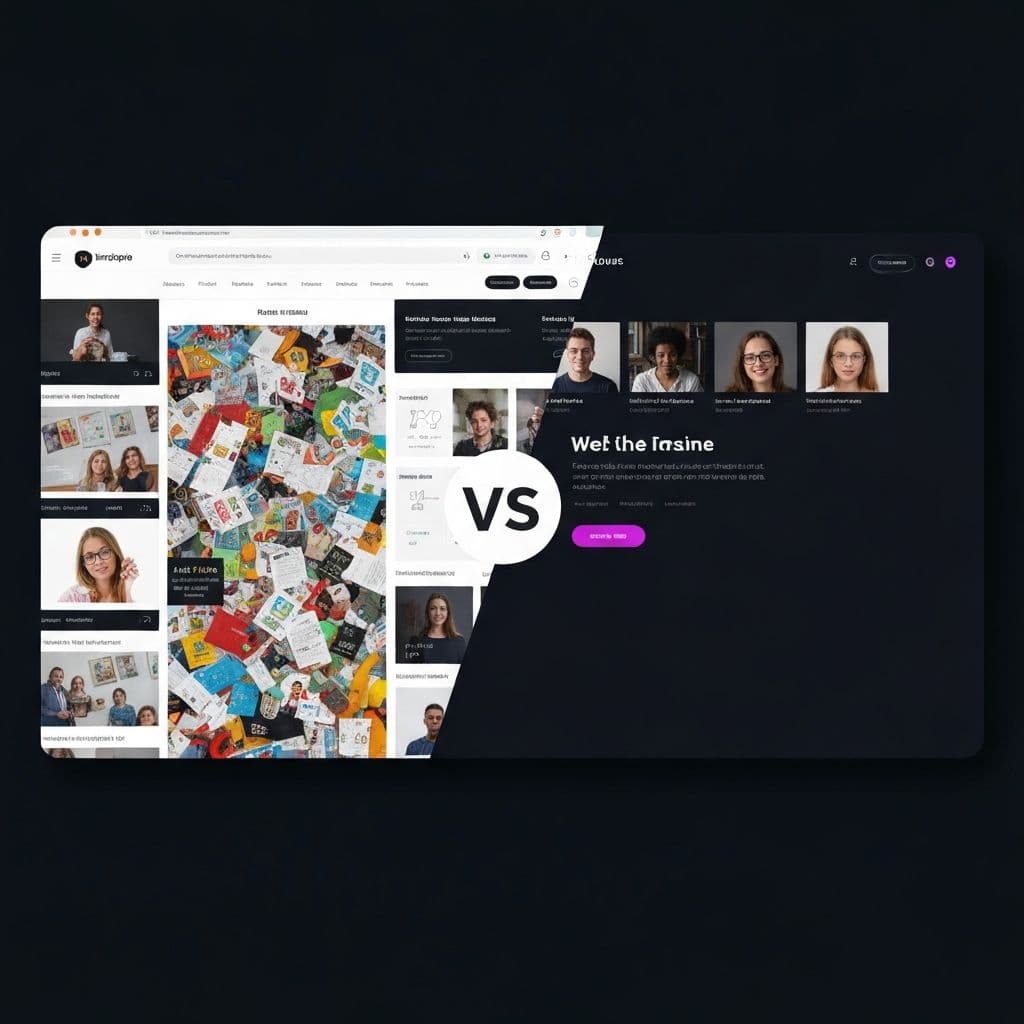
You know that feeling when you walk into a store and immediately turn around? The lighting's off, the layout makes no sense, and you can't find what you came for. Your website does the same thing to visitors every single day---except they don't even make it past the homepage.
Here's the brutal truth: you have about 3 seconds before someone decides whether to stay or bounce. That's not enough time for a pitch. It's barely enough time to make an impression. Yet most businesses treat web design like an afterthought---something to check off the list rather than the silent engine driving conversions, trust, and growth.
I've watched companies with genuinely great products fail because their websites looked like they were built in 2003. I've also seen smaller brands punch way above their weight because they understood one simple thing: web design isn't about looking pretty. It's about being understood.
What Actually Makes Web Design Matter
Let's clear something up first. When we talk about web design, we're not just discussing aesthetics. Yes, beautiful matters. But it matters because it builds confidence. It matters because it communicates professionalism before you say a single word.
Think of web design as the visual equivalent of your tone of voice. If you walked into a boardroom with wrinkled clothes and rambling half-sentences, would anyone take you seriously? Your website works the same way.
Effective web design encompasses:
- Visual hierarchy --- guidingvisitors' eyes to what matters most. Every font size, color choice, and whitespace decision should funnel attention.
- User experience (UX) --- the invisible scaffolding that makes navigation feel effortless.
- Brand consistency --- making sure your color palette, typography, and messaging tell the same story.
- Mobile responsiveness --- because if your site looks broken on a phone, you've already lost them.
- Speed --- nobody waits. A one-second delay in page load can tank your conversion rates.
The Real Cost of Bad Web Design
A poor-performing website doesn't just lose you customers today. It compounds over time. Search engines penalize slow, poorly designed sites. Social media algorithms don't favor links to broken user experiences. Customersdon't refer their friends to sites that frustrated them.
38% of people will stop engaging with a website if the content or layout is unattractive.
That's roughly one in three potential customers walking away based purely on first impression.
Bad web design destroys trust. If your site looks outdated, uses aggressive popups, or forces users through a maze of clicking to find basic information, you're signaling that you don't respect their time.
Building a Web Design Strategy That Works
Start with your visitor, not yourself
You don't design for you. You design for the person landing on your site asking, "Can you solve my problem?" Their problem is primary. Your story is secondary.
Define your conversion goal ruthlessly
What's the one thing you want people to do? Sign up? Schedule a call? Everything on your site should guide them toward that action.
Embrace whitespace
Whitespace isn't wasted space. It's breathing room. Some of the highest-converting websites look almost minimalist—because clarity converts.
Make it mobile-first, actually
Design for the 3.8 billion people accessing the web on phones first, then scale up to desktop.
Use design to tell your story
Your color choices, imagery, typography, and layout should reinforce your brand identity. A playful fintech company should look different from a corporate law firm.
Web Design Trends That Actually Matter
Immersive Experiences
Animations and interactive elements that serve a purpose—not just distract.
Dark Mode
No longer a gimmick. It's expected by a significant portion of users.
Personalization
Users expect websites to show relevant content based on behavior and context.
Accessibility
A properly accessible site works better for everyone, expanding your market.
The ROI of Getting Web Design Right
A website that converts at 3% instead of 1% doesn't sound dramatic until you do the math. With 10,000 visitors per month and an average customer value of $1,000, that's $200,000 in additional annual revenue.
- Lower customer acquisition costs
- Higher customer lifetime value
- Competitive advantage over mediocre competitors
- Reduced support burden
- Better brand perception from the first interaction
How to Audit Your Current Website
Open your website on your phone right now. Spend 30 seconds on the homepage. Can you immediately understand what you do? Can you find the next step without hunting? Does it feel fast or sluggish?
Load Time
Use Google PageSpeed Insights. Under 3 seconds is good. Under 2 seconds is excellent.
Mobile Responsiveness
Does everything work on a phone? Can you read text without zooming?
Clarity
Can three strangers explain what you do after 10 seconds on your homepage?
Conversion Path
Is there a clear next step? Or do visitors have to dig to contact you?
What's Next for Web Design
The landscape is shifting. AI is starting to play a role---in generating content suggestions, personalizing experiences, and analyzing user behavior to optimize design. Voice interfaces are becoming more common. Virtual and augmented reality are creeping into web experiences.
But here's what won't change: the fundamentals. Clear communication, fast performance, trust-building design, and genuine respect for the user's time and intelligence. Your website is one of the most important tools you have. Make that first conversation count.
Frequently Asked Questions
What's the difference between web design and web development?+
How much should a website redesign cost?+
How often should I update my website design?+
Does web design affect SEO?+
Can I update my website myself or should I hire professionals?+
Ready to transform your web presence?
Let's build a website that works as hard as you do.
Speak to Our Team