Why Your Chatbot Is Probably Failing Your Customers (And How to Fix It)
Most chatbots exist as a checkbox on a feature list rather than an actual solution. The technology works. The problem is how businesses implement it.
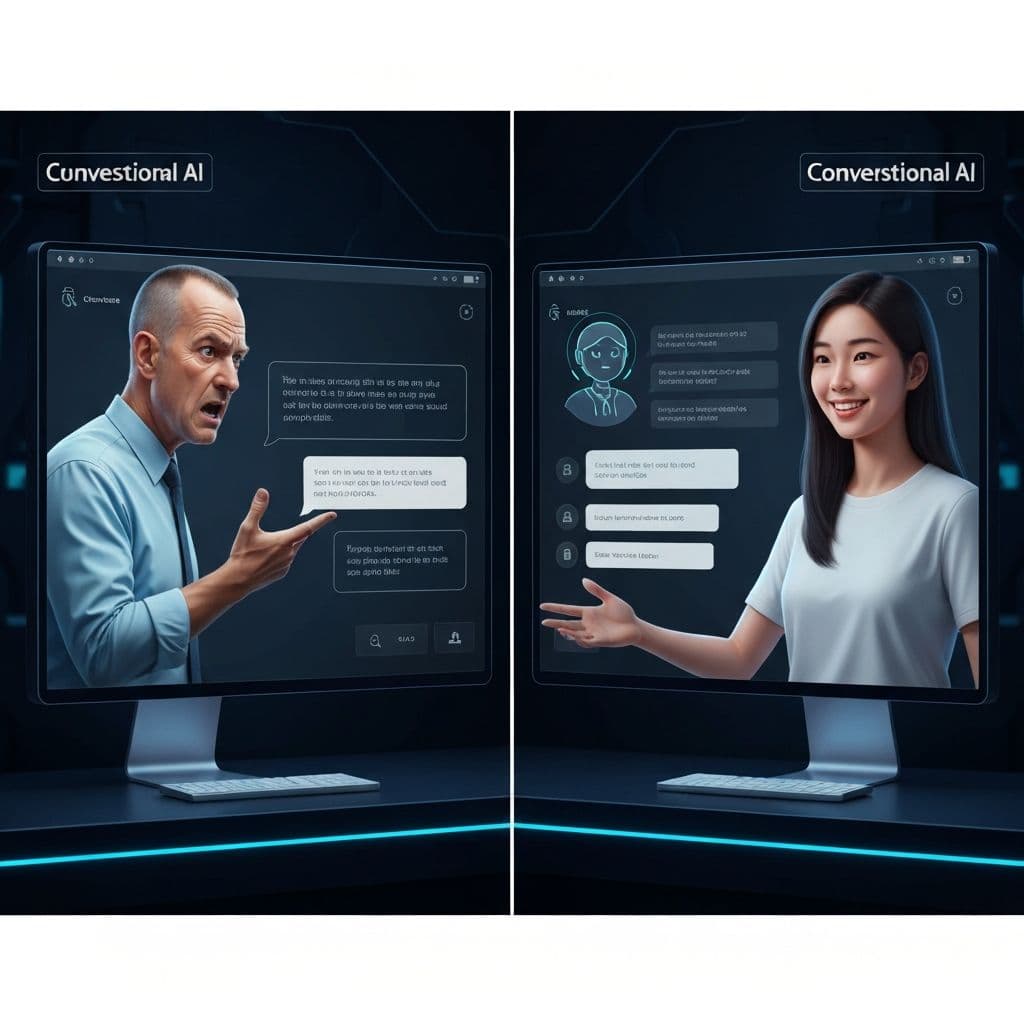
You've probably experienced this: you land on a website with a question, a chat window pops up with "How can we help?", you type something specific, and the bot responds with generic nonsense that makes you want to close the window and call someone instead.
That's the current state of most chatbots. Companies deploy them, get disappointed by the results, and either accept mediocrity or abandon them entirely. Here's what's frustrating: chatbots and virtual assistants don't have to be terrible. The technology works. The problem is how most businesses implement it.
What Chatbots Actually Are (And Aren't)
Rule-Based
Follow decision trees. If user says X, respond with Y. Rigid, predictable, fail outside pre-programmed responses.
AI-Powered
Use machine learning to understand natural language. Handle variations in phrasing. Learn from interactions.
Virtual Assistants
Integrate with multiple services. Handle complex multi-step tasks. Understand context across conversations.
Most businesses deploying chatbots are somewhere between rule-based and AI-powered. Few are thinking like virtual assistants, which is where the real opportunity lives.
The Problem With How Businesses Deploy Chatbots
A company decides they need a chatbot. They buy a platform. They spend a week setting up some basic responses. They flip the switch and expect magic. Then reality hits.
What Gets Skipped
The Chatbot Strategy That Actually Converts
Map the real customer journey
Not the journey you think customers take. Where do they get stuck? Where does your support team spend the most time?
Build for quick wins, not perfection
Start with one high-volume, low-complexity category. Order tracking. Password resets. Get that working beautifully before expanding.
Train on real conversations
Feed your chatbot examples of actual customer interactions. Show it edge cases and ambiguities.
Prioritize clarity over cleverness
"I don't understand, but I can connect you with someone who can" is better than pretending to understand and giving bad answers.
Make escalation seamless
The human agent should see the full conversation history. Context should transfer completely.
Measure what actually matters
Not "tickets deflected." Measure customer satisfaction, problem resolution, time-to-resolution.
Iterate based on data
Which conversations are failing? Where are customers giving up? Use that feedback to improve.
What's Actually Possible Now
The capabilities of chatbots and virtual assistants have genuinely improved in the last 18 months. Large language models have changed what's possible.
Check real systems
Pull actual order information, check inventory, verify customer account status in real-time.
Execute actions
Issue refunds, create tickets, schedule appointments, reset passwords. Not just inform—solve.
Hand off with context
Full conversation, intent, and relevant data moves with the customer to the human agent.
Learn from feedback
When a customer says "that didn't help," the system flags it for analysis and improvement.
The Real ROI of Getting Chatbots Right
Support cost reduction
Customer availability
Handle time reduction
Staff focus on complex issues
But the real ROI is subtler: customer satisfaction improves, support staff morale improves, you gather intelligence from every interaction, and you scale without scaling headcount.
Where Chatbots Fail (And What To Do Instead)
Chatbots aren't magic. The strategy isn't to replace humans with chatbots. It's to use chatbots to handle what they're good at so humans can focus on what they're good at.
Chatbots Excel At
- High volume, repetitive queries
- 24/7 availability
- Consistent responses
- Speed and scale
- Data gathering
Humans Excel At
- Emotional interactions
- Complex, multi-faceted problems
- Situations requiring discretion
- Novel / unprecedented issues
- Judgment and empathy
Virtual Assistants: The Next Evolution
Virtual assistants go beyond chatbots. They're not just conversational—they're proactive. They anticipate needs, integrate across systems, and feel less like talking to customer support and more like having a dedicated advocate.
Imagine a Virtual Assistant That:
Notices you haven't logged in for a month and proactively reaches out
Recognizes patterns in your usage and suggests features you might need
Handles routine tasks without you asking (renewing subscriptions, applying discounts)
Escalates to a human the moment it detects a situation needs human judgment
Remembers context from months ago and references it naturally
How to Audit Your Current Chatbot
If You Have a Chatbot, Ask:
- 1.Does it actually solve problems, or just provide information?
- 2.Would a customer prefer to use it or avoid it?
- 3.What's the most common reason customers escalate?
- 4.How much manual work goes into maintaining it?
- 5.What would happen if you turned it off?
If You Don't Have One, Ask:
- 1.What questions does your support team answer most frequently?
- 2.How much time is spent on repetitive vs. complex issues?
- 3.When do customers most need help?
- 4.What's your customer satisfaction with current support?
What's Next for Conversational Customer Service
The trajectory is clear: chatbots and virtual assistants are becoming expectations, not novelties. Customers increasingly expect to solve simple problems instantly, expect 24/7 availability, and expect the system to remember them.
Companies that deploy chatbots strategically, that treat them as tools to enhance human service rather than replace it, that measure real customer satisfaction rather than just deflection metrics will have a distinct advantage. The technology is ready. The question is whether your strategy is.
Frequently Asked Questions
What's the difference between a chatbot and a virtual assistant?
Chatbots answer questions and provide information through conversation. Virtual assistants go further—they execute actions, integrate with multiple systems, anticipate needs, and feel more like a dedicated helper than customer support.
How much does it cost to implement a chatbot?
A rule-based chatbot on an existing platform might cost $1,000-$5,000 to set up. An AI-powered chatbot with custom training could run $10,000-$50,000+. The real cost is often the strategy and training, not the software platform.
Can a chatbot replace customer support?
No. A good chatbot reduces support workload by handling volume and routine tasks, but it can’t replace humans for complex issues, emotional interactions, or problem-solving that requires judgment.
How do you train a chatbot to be effective?
Feed it examples of real customer conversations. Show it how customers actually phrase questions, what edge cases exist, and how the business should respond. Continuous feedback loops improve accuracy over time.
How do you measure chatbot success?
Track customer satisfaction, problem resolution rates, time-to-resolution, and whether customers would recommend the experience. A chatbot that’s not improving customer experience isn’t succeeding, even if it’s deflecting tickets.
Ready to Build a Chatbot That Actually Works?
NESPRA helps businesses implement AI-powered chatbots and virtual assistants that improve customer experience, reduce support costs, and drive real results.